|
世界の熱帯雨林:
残留するものを保存する
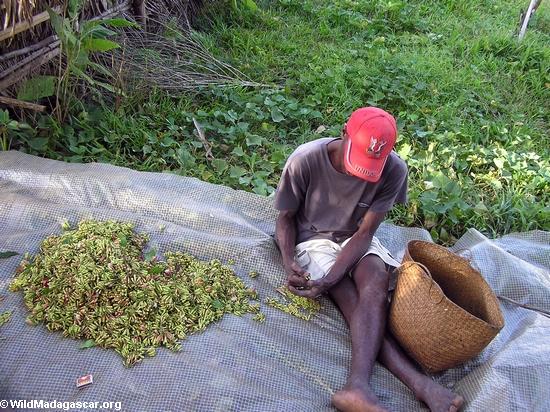
マダガスカルのクローブの準備。
(R.バトラーによる写真) |
|
大規模な森林製品の持続可能な使用
雨林森林伐採の約40パーセントは財界側により起こされます:
記録、牛、農業の開発、採掘、水力発電および他の産業。 今日、これらの産業はたいてい森林エリアの1回利用に依存し、それらの即時の資源が無くされた後に、新しいパッチに前進します。
これらの産業は、しばしば、迅速で、容易な収益の検索について、貧しくされた政府により激励されます。
これらの政府は、それらの借金を清算し、短期にそれらの経済を改善するために外貨を採り入れるための方法として森林に期待し、これらの重要な自然な固定資産の枯渇を見渡しています。
行ないの時に そう これらの政府が未来の成長およびさらに貧困未来の世代を遅らせているかもしれません。
熱帯の国が安い削片板および生の材木を輸出することを可能にするそれらのような間違いの経済を促進する(補助金と市場誘因を通じて)時に、政府が未来の経済成長のための最もよいパスを無視しています。
長期的成長のために、開発途上国は、技術進歩および持続可能な使用を促進する産業を促進してそれらの技術的なベースを増強しはじめなければなりません。
富は工業から収集した 重労働から得られなくて、本質的に賃貸される
か、または経済のために精巧さけれども土地の特定の品質から堅固な基礎を建てません。
開発というよりも、問題が、資源の採掘に基づいて地方の開発モデルにあります。
天然資源は未来の収穫の考慮なしで採掘されます。
雨林を救うために、私達は、環境を荒廃させずに高収益であり続けるために、これらの会社のために方法を見つけなければなりません。
未来に、もし私達が森林を見積もるならば、これらの産業は、それを破壊するのでなく、環境を保存する仕事を提供しなければなりません。
もしそれらが供給、家に利用可能な仕事の唯一のフォームであるならば、私達は、ローカルな人々がこれらの会社と雇用を避けることを適度に期待することができず、それらの家族に衣服を着せます。
持続可能な産業は、もし適切に実行されるならば、記録するまたは大規模な農業と違って、未来の世代に備えることが森林の能力を減少させないので貧しい地方に長期の雇用を提供できるでしょう。
森林資源を利用する産業に直面している多くの挑戦があり、難しい決定と妥協案は作られる必要があります。
これらの挑戦は、森林が提供する森林製品とサービスの価値の異なる意見から生じます。
開発者は、森林製品と資源への成長需要を満たすための方法を見つけなければならず、森林および環境のサービスを保護する間、それらは提供します。
404 Error: Page Not Found
|
|
|
 |
|
|
|
APOLOGIES, BUT THIS PAGE IS NO LONGER AVAILABLE
RAINFOREST INFORMATION
FOR KIDS
TROPICAL FISH
DATA
|
Data aggregations found on mongabay.com
Deforestation figures for selected countries: deforestation statistics for more than 200 countries worldwide. Figures come from the Food and Agriculture Organization of the United Nations.
Country statistics: Other country-specific statistics including land area, human, population, economic indicators, and environmental conditions. Figures come from the Food and Agriculture Organization of the United Nations.
AIDS Statistics: for selected countries. From the U.S. Census Bureau.
2005 city population estimates for the world: proprietary population estimates for more than 10,000 cities.
World's Largest Cities by Country
United States Zip Codes: proprietary aggregation of U.S. postal codes.
World's Largest Cities by Country
Countries and Capitals
World's Largest Cities
World's Largest Urban Areas
World Population Projections - 2002, 2010, 2015, 2020: United Nations projections.
World Population Projections: United Nations projections for individual cities.
Country studies: Text excerpted from on-line versions of books previously published in hard copy by the Federal Research Division of the Library of Congress under the Country Studies/Area Handbook Program sponsored by the U.S. Department of Army.
Occupations in the United States: By job title. Includes job description and overview, number of people employed in a given occupation, and other data.
Occupations in the United States: Comparison statistics by job title for cities in the US. For a given city, includes number of people employed in an occupation and salary data.
Regional Occupational Data for the United States: By city. For a specific city, includes the number of people employed in a given occupation and salary figures.
Tax Data for the United States
World's Largest Countries by Land Area
World's Largest Countries by Population
|
|
XML / RSS / Syndication options
There are three XML feeds for mongabay.com
|
|
|
MONGABAY.COM
Mongabay.com seeks to raise interest in and appreciation of wildlands and wildlife, while examining the impact of emerging local and global trends in technology, economics, and finance on conservation and
development >>
|
|
復習質問: - 森林資源の持続可能な使用を促進することがなぜ重要ですか?
- 記録のような工業は一般長期の経済成長に最良ではないになぜですか?
[印刷バージョン]
続く: 第2の森林製品
Rhett A. Butler.
ページ:
|